Interdisciplinary Foundations
Core Pillars of the accelerator


The ArtAICare Therapist Accelerator Training Program
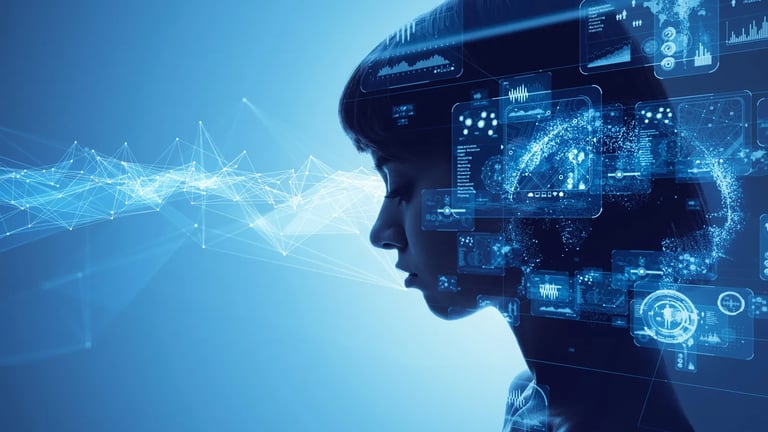
This program integrates Artificial Intelligence (AI), human–computer interaction, cognitive neuroscience, brain–computer interfaces, and immersive technologies (VR/AR/XR) to advance therapeutic design. Therapists gain practical skills in computational modeling, neurotechnology, and affective systems to support cognitive and emotional processes. The interdisciplinary scope ensures a rigorous understanding of how these domains interact within therapeutic workflows.
We empower therapists to be at the forefront of AI-enabled care with confidence. This means building fluency in both the benefits and risks of emerging technologies, ensuring therapists remain in control of the therapeutic process. From data protection and GDPR to the EU AI Act and ethical compliance, our training prepares practitioners to navigate the legal, technical, and clinical demands of digital mental health interventions.
Human-Centered Practice


Evidence-Based Methodology


All practices taught are grounded in cognitive science, affective neuroscience, and empirical research in Human-centred AI. Participants learn to assess and validate the effectiveness of digital interventions using both subjective and objective measures. This foundation ensures that creative therapeutic approaches are not only innovative but also replicable, measurable, and clinically verifiable.
Participants are trained to be leaders in the evolution of mental health care beyond technical skills to strategic capability. The program develops therapist agency in shaping ethical innovation,co-designing intelligent systems, and advocating for responsible AI in clinical contexts. Graduates emerge equipped to guide interdisciplinary teams, influence digital policy, and design the future of care.
Therapeutic Leadership

Master AI & Interactive Technologies for Mental Health Care and Beyond
Flexible Programme Formats
Choose the Delivery That Fits Your Needs
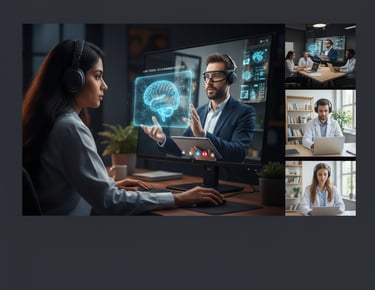


Hybrid (8 Weeks)
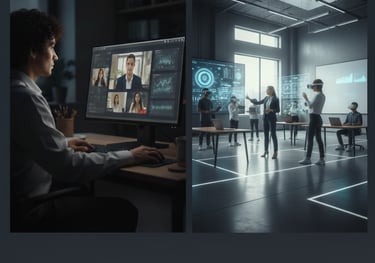
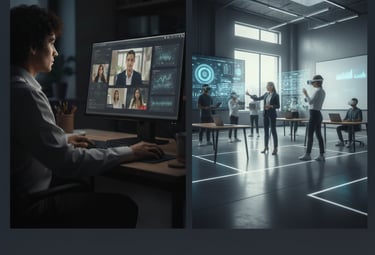
Combines online modules with 6 hours of in-person immersive tech and BCI labs. Best suited for learners who want flexibility without missing immersive tech experiences.
All content delivered remotely, including live demos of Immersive tech and BCI tools. Ideal for global access or those unable to attend in person.
Fully Online (6 Weeks)
In-Person (7-Day Intensive)
Hosted at our facilities or your institution. Includes Lectures, hands-on labs and expert workshops. Tailored for team training or deep dives.
1. Artificial Intelligence Demystified
This opening module gives therapists an accessible but robust foundation in AI. It demystifies the terminology, clears common misconceptions, and shows how AI systems have evolved to impact daily life.
2. How Does AI Learn?
This module gives therapists a peek behind the curtain: how does AI actually “learn” to make decisions? Understanding the differences between AI models builds confidence in evaluating which tools are trustworthy, how they make predictions, and where bias might creep in.






Modules
3. AI in Daily Life
This module helps therapists connect the dots between the AI systems shaping everyday life and the subtle psychological impacts they may trigger. By understanding personalization logic and potential harms, therapists gain insight into how clients relate to digital systems and how to respond with informed care.
4. New Frontiers: Human-Centred AI (HCAI)
This module introduces a foundational shift in AI, moving from autonomous systems to tools that extend human values and agency. Through case studies in museums and cultural spaces, it demonstrates how human-centred design is already shaping user experiences, and how these principles can later be adapted to clinical, creative, and therapeutic spaces.
5. AI in Mental‑Health Care
This module takes the design principles introduced in the previous module and brings them directly into the therapy room. Therapists will explore how AI can support the therapeutic process. Using a real-world case study taken from clinical trials it maps risk mitigation and best practices to amplify therapeutic outcomes.






6. Affective Computing for Art Therapy
This module gives therapists practical insight into how affective computing extends their ability to detect subtle affective shifts, monitor emotional dynamics, and access nonverbal signals that enhance therapeutic precision, especially in digital, remote, or hard-to-access contexts.
7. Immersive Technologies in Arts Therapy
This module introduces the foundations of immersive technologies and trains therapists to adapt classic art therapy techniques from guided exposition to drawing and sculpting into virtual environments. Using immersive wearables such as VR headsets, therapists explore how presence, embodiment, and spatial interaction can support trauma recovery, remote care, and new modes of creative expression. This module prepares therapists to lead in the future of digitally mediated therapeutic practice.
8. Measuring Therapeutic Effects
This module introduces non-invasive Neurophysiological sensing tools that can help therapists evaluate what’s working in a session. By integrating objective and subjective data, therapists gain new insight into client progress and session design.




9. Regulation, Data Protection and Therapist Accountability
This module provides the legal, ethical, and clinical safeguards therapists need when working with AI and digital tools. It covers GDPR, HIPAA, the EU AI Act, consent, anonymization, and AI risk classification, alongside best practices for maintaining clinical judgment, professional boundaries, and clear human–machine role separation.
10. Capstone Project & Integration
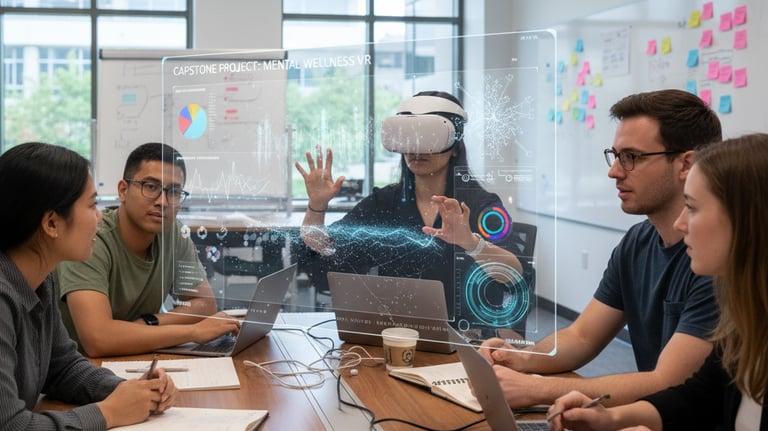
In this final module, therapists bring it all together. Participants design their own AI-augmented arts therapy project, a fully scoped, ethically considered pilot with full access to devices and the BCI toolkit. This is where therapists step into their new role as digital innovators, ready to lead change in their institutions.
Enroll in the Next Cohort of Therapist Accelerator Program.
Limited spots available.
Request a custom training package for your institution.
We work with different organizations, hospitals, clinics, universities, and care centers to upskill teams in AI and emerging technologies.
Apply for the Next Cohort
The ArtAICare Therapist Accelerator Training Program
Individual application form
FAQs
Who should enroll?
Therapists and mental health pros eager to integrate AI tools.
Are courses self-paced?
Yes, you can learn on your schedule with lifetime access to materials.
What tech skills are needed?
Basic computer familiarity is enough; we guide you through AI concepts step-by-step.
Is there certification?
Yes, complete courses earn you a certificate to showcase your skills.
How to get support?
Reach out via our contact page or during live Q&A sessions.
